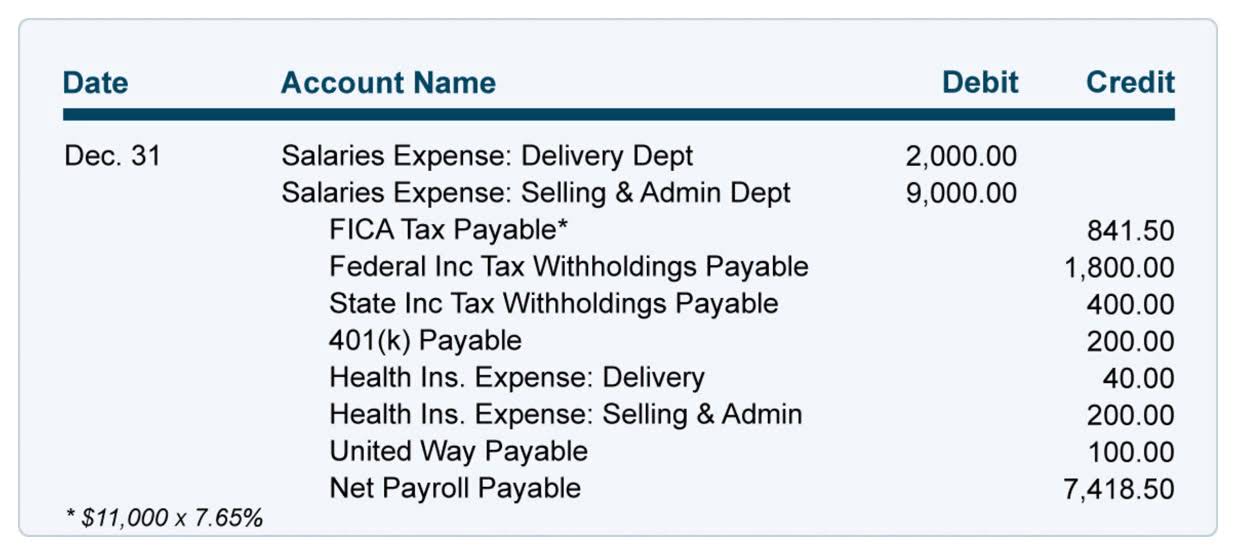
We’ll pair you with a bookkeeper to calculate your retained earnings for you so you’ll always be able to see where you’re at. Retained earnings are like a running tally of how much profit your company has managed to hold onto since it was founded. They go up whenever your company earns a profit, and down every time you withdraw some of those profits in the form of dividend payouts. There are numerous factors to consider to accurately interpret a company’s historical retained earnings. The discretionary decision by management to not distribute payments to shareholders can https://topnotchdc.com/2020/10/26/associated-food-stores-hiring-accounting/ signal the need for capital reinvestment(s) to sustain existing growth or to fund expansion plans on the horizon. Both management and stockholders would also want to utilize surplus net income towards the payment of high-interest debt over dividend payout.
- Retained earnings are an important part of accounting—and not just for linking your income statements with your balance sheets.
- Others treat interest received as investing cash flow and interest paid as a financing cash flow.
- This method is particularly useful for well-established and profitable companies, as it directly links valuation to earnings performance.
- Deferred revenue represents revenue that has been received but not yet earned.
- The income statement illustrates the profitability of a company under accrual accounting rules.
- This typically coincides with the end of the accounting period, which is usually monthly, quarterly, or annually.
The Role of the Income Statement

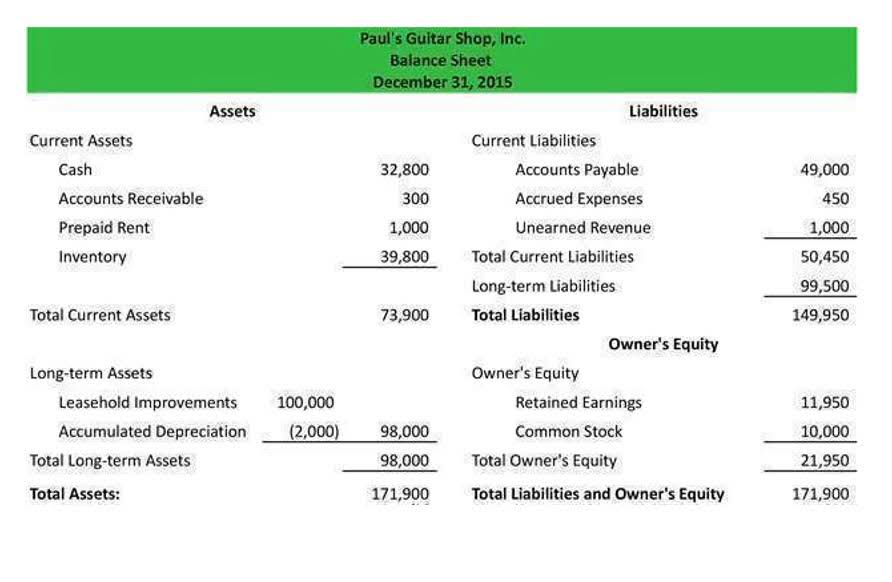
Next, classify assets based on their expected time of conversion into cash or use in operations. Assets expected to be realized within one year are classified as current assets, while those used over a longer period are classified as long-term assets. Companies may pay out either cash or stock dividends, and in the case of cash dividends they result in an outflow of cash and are paid on a per-share basis. Management, on the other hand, will often prefers to reinvest surplus earnings in the business.
Applications in Financial Modeling

This process helps reset the revenue accounts to zero at the end how to calculate retained earnings of an accounting period, providing a clear picture of the company’s financial performance for that period. The balance sheet helps you evaluate a company’s financial stability, compare performance with peers, and assess how efficiently the business manages its resources. It also supports deeper analysis when used together with the income statement and cash flow statement.

Where to find dividends paid in the cash flow statement
The purpose of a balance sheet is to ensure all your bookkeeping journal entries are correct and every penny is accounted for. For example, if your business earns $20,000 in profit after expenses and taxes and doesn’t pay dividends, that full amount becomes retained earnings. Companies reinvest retained earnings to buy equipment, expand product lines, or acquire other businesses. Warren Buffett stresses the importance of CEOs mastering capital allocation, particularly when it comes to retained earnings.
Step 1: Identify Revenue Accounts
- Net income helps investors, analysts, and business owners evaluate a company’s financial health.
- In terms of financial statements, you can find your retained earnings account (sometimes called Member Capital) on your balance sheet in the equity section, alongside shareholders’ equity.
- The direct method shows the major classes of gross cash receipts and gross cash payments.
- This account may or may not be lumped together with the above account, Current Debt.
- Or, if investors let the company retain a dollar of earnings instead of paying it out as dividends, the company will make 20 cents of profit per year from that dollar.
If the starting point profit is above interest and tax in the income statement, then interest and tax cash flows will need to be deducted if they are to be treated as operating cash flows. Clearly, the exact starting point for the reconciliation will determine the exact adjustments made to get down to an operating cash flow number. Working capital represents the difference between a company’s current assets and current liabilities. Any changes in current assets (other than cash) and current liabilities (other than debt) affect the cash balance in operating activities.
- Earnings per share (EPS) is an important metric that investors and analysts use to assess the profit a company generates per share of stock.
- Get free guides, articles, tools and calculators to help you navigate the financial side of your business with ease.
- Many companies present both the interest received and interest paid as operating cash flows.
- Rail transport is also environmentally friendly, producing less greenhouse gas emissions than road transport.
- As a result, it supports deeper financial analysis, particularly in evaluating liquidity, solvency, and the company’s ability to meet financial obligations.
What is a closing entry for revenue accounts?

Worth noting, ROE does have some limitations, such as being affected by one-off events that impact a company’s revenue. You’ll also want to dig into a company’s ROE trends over time, especially if it’s gotten lower. Then, you’d want to look into net income and check for one-time items such as fines. These can affect a company’s ROE significantly, especially how it compares to its peers. Additionally, it’s best to look at ROE trends over time, which you want to be either stable or rising, instead of relying solely on a single number. To get a good idea of whether a company is doing well, it helps to look at retained earnings how ROE has evolved over time.
Leave a Reply